


The landscape has changed drastically over the last few years. In 2023, you could paste a generic ChatGPT prompt, throw it on a website, and make a few dollars. In 2026, algorithms demand quality, human-in-the-loop workflows, and actual value. The good news? You still don’t need to know how to code, and you don’t need to buy a $500 course, just do any of the following AI side hustles.
If you are willing to treat this like a real business rather than a lottery ticket, here are ten realistic AI side hustles you can start this weekend using exact tools, step-by-step strategies, and zero programming knowledge.
1. The “Faceless” YouTube Shorts Channel
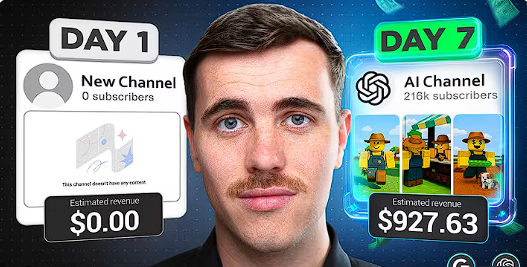
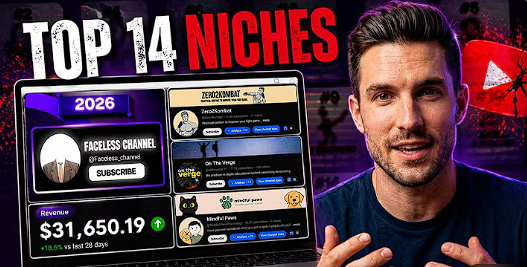
Short-form video is still the fastest way to get organic traffic and one of the best AI side hustles in 2026. You don’t need to show your face, buy an expensive camera, or even use your real voice.
- The Strategy: Pick a high-interest niche with mass appeal—like “Weird History Facts,” “Psychology Tricks,” or “Luxury Real Estate Tours.” The broader the appeal, the higher the view count potential.
- The Tech Stack:
- ChatGPT / Claude: To write the 40-second script hooks.
- ElevenLabs: The undisputed king of realistic AI voiceovers. It does not sound robotic, and YouTube explicitly monetizes it.
- CapCut (Desktop): Use their auto-captions feature to create those fast-paced, colorful subtitles everyone loves.
- Action Plan: Generate 30 scripts in one weekend. Batch record the audio using your AI voice. Spend 2 hours putting B-roll footage over the audio in CapCut. Schedule one Short to post every day for a month using YouTube’s native scheduler.
- The Common Pitfall: Most beginners quit after 10 videos because they get zero views. The YouTube Shorts algorithm tests content in “batches.” You must post consistently for 30 days before the algorithm figures out who your audience is.
- Scaling Up: Once you are monetized, hire an editor on Fiverr to take over the video assembly, allowing you to focus purely on script research and running multiple channels.
- Earning Potential: $500–$2,000/month via the YouTube Partner Program (Ad revenue) and affiliate links placed strategically in the pinned comments.
2. AI-Assisted Print on Demand (Etsy)
People love buying custom mugs, t-shirts, and posters with unique artwork, but creating that art used to require a degree in graphic design.
- The Strategy: You design the product, but a fulfillment company prints and ships it only after a customer buys it. You hold zero physical inventory, meaning zero upfront risk.
- The Tech Stack:
- Midjourney / DALL-E 3: To generate high-quality, trendy graphics (like retro 90s designs, cyberpunk art, or minimalist line drawings).
- Vector Magic: To convert AI images into scalable vector formats so they don’t look pixelated or blurry on a physical t-shirt.
- Printify / Printful: These platforms connect directly to Etsy to automate the shipping process.
- Action Plan: Research trending keywords on Etsy using a tool like eRank. Generate 50 unique designs tailored to those keywords. Upload them to Printify, sync your Etsy store, and optimize your product titles.
- The Common Pitfall: Selling “generic AI art.” A picture of a cool robot won’t sell. A mug that says “World’s Okayest Software Engineer” with a funny AI-generated graphic will. Combine art with relatable text.
- Scaling Up: Expand your winning designs onto other products. If a dog design sells well on a t-shirt, put it on a phone case, a mousepad, and a hoodie.
- Earning Potential: $300–$1,500/month depending on your niche selection and Etsy SEO optimization.
3. Building No-Code Chatbots for Local Businesses
Every local dental office, plumbing company, or real estate agency needs customer service, but most cannot afford a 24/7 receptionist. They are losing leads while they sleep. Another good contender for best AI side hustles in 2026
- The Strategy: Build personalized AI helpers that can book appointments, answer pricing FAQs, and qualify leads, then lease them to small businesses.
- The Tech Stack:
- Voiceflow or Botpress: Completely drag-and-drop, no-code platforms to build logic trees and AI agents.
- OpenAI API: To give the bot its conversational “brain” so it doesn’t sound like a rigid phone menu.
- Action Plan: Build a demo “Real Estate Agent Bot” or “Dental Clinic Bot.” Record a 60-second screen-share video showing how it captures a lead’s email at 2 AM. Email that video directly to 50 local business owners.
- The Common Pitfall: Pitching the “AI” instead of the “Solution.” Business owners don’t care about Large Language Models; they care about missing out on a $500 client because they didn’t answer the phone. Sell the booked appointment, not the bot.
- Scaling Up: Turn your custom bot into a template. Once you build a great bot for one plumber, you can sell the exact same template to 50 other plumbers in different cities.
- Earning Potential: $500 setup fee + $50 to $150/month per client for “hosting and maintenance.”
4. The Niche Educational Newsletter
Email newsletters are making a massive comeback because you actually own your audience. You are completely safe from TikTok bans or Google algorithm changes.
- The Strategy: Start a weekly email focused on one hyper-specific topic, like “Weekly AI Tools for High School Teachers” or “Remote Tech Jobs for College Students.”
- The Tech Stack:
- Perplexity AI: Use it to quickly research, scrape, and summarize the top 5 news articles in your niche each week in seconds.
- Beehiiv: The best newsletter platform currently available (and free to start up to 2,500 subscribers).
- Action Plan: Set up a clean landing page. Post helpful, actionable content on X (Twitter) or LinkedIn to drive signups. Send one highly valuable, strictly formatted email every Tuesday morning.
- The Common Pitfall: Being too broad. A newsletter about “Technology” will fail. A newsletter about “SaaS tools for solo-founders” will succeed. Riches are in the niches.
- Scaling Up: Cross-promote with other newsletter creators of similar sizes to swap subscribers for free.
- Earning Potential: Once you hit 1,000 subscribers, you can sell “sponsorships” for $50–$100 per email, plus integrate affiliate revenue for tools you recommend.
5. Faceless Data & Statistics Channels
There is a massive, dedicated audience for long-form, visually engaging data videos. Think military size comparisons, country GDP timelines, or software popularity races.
- The Strategy: Focus heavily on data-driven content. The visual graphics do the heavy lifting, making this an incredibly sticky format that keeps viewers watching until the very end.
- The Tech Stack:
- ChatGPT: To scrape and format the raw statistics into clean CSV files for easy importing.
- Flourish Studio: A free web tool to create those viral “bar chart races” and interactive data visualizations.
- Canva Pro: To add background music, title cards, transitions, and overall polish.
- Action Plan: Find a trending geopolitical or tech topic. Format the data, build the visualization in Flourish, export the video, and upload to YouTube with an attention-grabbing thumbnail.
- The Common Pitfall: Using inaccurate data. This audience is smart. If you get the statistics wrong, the comments section will destroy your video’s credibility. Always double-check AI-generated numbers.
- Scaling Up: Translate your most successful English videos into Spanish and Hindi using AI dubbing tools to open up entirely new revenue streams with zero extra research.
- Earning Potential: Channels in factual niches have excellent CPMs (Ad rates). A successful channel can pull in $1,000 to $5,000+ per month once established.
6. Automated Pinterest Affiliate Marketing
This is the ultimate quiet side hustle. You don’t even need a WordPress website to start; you just need a good eye for visual aesthetics.
- The Strategy: Find high-paying affiliate products. Create attractive, vertical pins that link directly to the product checkout page or landing page.
- The Tech Stack:
- ClickBank / Amazon Associates: To find verified products to promote.
- Tailwind: An official Pinterest partner automation tool that pins your images at the perfect time, 24/7.
- ChatGPT: To write SEO-optimized pin titles and descriptions so people find your images when they use Pinterest as a search engine.
- Action Plan: Create 5 distinct pin designs in Canva for a single product (different colors, different text hooks). Schedule them in Tailwind to drip feed over a week. Repeat daily.
- The Common Pitfall: Treating Pinterest like Instagram. Pinterest is a visual search engine, not a social network. Keywords in your titles and descriptions are more important than followers.
- Scaling Up: Create multiple Pinterest accounts for different niches (one for home decor, one for software tools, one for fitness).
- Earning Potential: $100–$1,000/month entirely passively once the pins gain algorithmic traction and start circulating.
7. Video Localization and Dubbing
As YouTubers expand globally, the demand for multilingual content has skyrocketed. Creators want to tap into the massive Spanish and Hindi-speaking markets.
- The Strategy: Help English-speaking creators translate their existing videos to double their audience without them having to record anything new.
- The Tech Stack:
- Rask.ai / HeyGen: These advanced AI tools don’t just translate the audio; they clone the creator’s exact voice and alter the video’s lip movements to match the new language perfectly.
- Action Plan: Find YouTubers with 50k–200k subscribers (the sweet spot of having money but not having a massive corporate team). Download one of their videos, dub 60 seconds of it into Spanish for free, and email it to them as a cold pitch.
- The Common Pitfall: Pitching massive creators (1M+ subs). They already have localization agencies on retainer. Stick to the mid-tier creators who are actively looking for growth hacks.
- Scaling Up: Build a specialized agency. Once you lock in a few clients, offer package deals (e.g., translating their entire back-catalog of 100 videos for a flat rate).
- Earning Potential: Freelancers in this niche charge $100 to $500+ per localized video.
8. AI-Powered YouTube Thumbnail Design
YouTubers live and die by their click-through rate (CTR). They constantly need high-quality thumbnails, often requiring multiple different designs per video to run A/B split tests.
- The Strategy: Offer bulk thumbnail creation services to mid-sized creators, utilizing AI to speed up the workflow by 90%.
- The Tech Stack:
- Midjourney: To generate custom, hyper-realistic background elements, textures, or 3D characters.
- Photoroom: To instantly remove backgrounds from creator headshots and add perfect edge lighting.
- Canva / Photoshop: To add the final typography, drop shadows, and color grading.
- Action Plan: Create a mock portfolio of 20 incredible thumbnails. DM creators on X or Instagram offering to redesign their worst-performing thumbnail for free. If the new thumbnail increases their views, they will hire you forever.
- The Common Pitfall: Making thumbnails too complex. The best thumbnails on YouTube have less than 3 elements and under 4 words of text. It needs to be readable on a tiny smartphone screen.
- Scaling Up: Offer a “Thumbnail Retainer” package. $200 a month for 10 guaranteed thumbnails.
- Earning Potential: $15 to $50 per thumbnail. If you secure 5 recurring clients who post weekly, that’s steady, predictable income.
9. Freelance Voiceover Production
Businesses, indie game developers, and startups frequently need professional-quality audio for explainer videos, ads, and phone systems, but renting studio time and hiring actors is expensive.
- The Strategy: Offer professional voiceover services on freelancing platforms, fulfilling the orders using enterprise-grade AI audio.
- The Tech Stack:
- ElevenLabs (Creator Tier): You must use the paid tier to legally secure the commercial license and access the highest quality, emotion-controllable voices.
- Audacity: A free, open-source audio editor to trim dead space, normalize the audio levels, and add background music if requested.
- Action Plan: Set up a highly optimized gig on Fiverr or Upwork for “Professional Audio/Video Narration.” Use ElevenLabs to generate your 5 portfolio samples (Corporate, energetic, dramatic, etc.).
- The Common Pitfall: Not tweaking the AI pacing. You cannot just paste 1,000 words into the generator and export. You must manually adjust the pauses, breaths, and emphasis tags to make it sound human.
- Scaling Up: Move off Fiverr and start directly pitching digital marketing agencies who produce high volumes of Facebook and TikTok ads.
- Earning Potential: $50 to $200 per project, with massive potential for repeat clients.
10. SEO Blog Flipping
This is the digital equivalent of flipping real estate. You build a niche website, use AI to fill it with highly optimized traffic-generating content, let it age, and sell the whole digital asset.
- The Strategy: Pick a low-competition, high-search-volume niche (like “Indoor Succulent Care” or “Drone Repair Manuals”). Build a fast WordPress site. Fill it with SEO-optimized articles. Wait for it to rank, and sell it to an investor.
- The Tech Stack:
- Hostinger / WordPress: For fast, cheap web hosting and site architecture.
- KoalaWriter / ChatGPT: To generate high-quality, long-form SEO articles that are properly formatted with H2s and H3s.
- Flippa / Empire Flippers: The marketplace websites where you list and sell the finished asset.
- Action Plan: Build the site and publish 3 articles a day for a month. Hook up Google Analytics and Search Console. Leave the site alone and let it age for 6 months until the Google Sandbox period ends and traffic spikes.
- The Common Pitfall: Giving up at month 3. SEO takes time. A brand-new domain will rarely see significant Google traffic before month 6. This is a waiting game.
- Scaling Up: Build 5 sites in 5 different niches simultaneously.
- Earning Potential: Websites typically sell for 30x to 40x their monthly profit. A blog making a meager $100/month from AdSense can be flipped for $3,000 to $4,000.
Frequently Asked Questions About AI Side Hustles (FAQ)
Do I need to know how to code to start these AI side hustles? No. All of the AI side hustles listed in this guide relies on “No-Code” tools. Modern AI platforms are built with intuitive, drag-and-drop interfaces or simple text prompts. Your ability to think logically and solve problems is much more valuable than knowing Python or JavaScript.
Can I do this from my phone, or do I need a laptop? While you can theoretically run a Faceless YouTube channel or Pinterest affiliate marketing from a high-end smartphone using apps like CapCut, you will be significantly slower. For heavy workflows like building Chatbots or doing SEO blog formatting, a laptop or desktop is highly recommended for efficiency.
Is it too late to start an AI side hustles in 2026? Absolutely not. We have simply transitioned from the “hype phase” to the “utility phase.” The people who were just pasting lazy ChatGPT prompts have been wiped out by algorithms. The market is now wide open for people willing to build high-quality, human-reviewed AI systems by people doing AI side hustles too.
How much money do I need to start AI side hustles? Most of these require zero upfront capital. YouTube, Pinterest, and Etsy are free to join. Tools like ChatGPT, Canva, and CapCut have robust free tiers. The only ai side hustles that requires a small budget is SEO Blog Flipping, as you will need to purchase a domain name and basic web hosting (usually under $50 a year).
The Bottom Line: The tools are out there, and they are more powerful than ever. The secret to success isn’t trying all ten at once. Pick one of these AI side hustles, stick to it relentlessly for 30 days, ignore the shiny object syndrome, and start building your digital income.